Vietnam attaches importance to its traditional friendship with Lithuania and hopes to deepen cooperation across a wide range of sectors, Minister of Foreign Affairs Le Hoai Trung told his Lithuanian counterpart Kestutis Budrys during their talks in Hanoi on July 28.
Welcoming the Lithuanian minister, Trung said the visit reflects Lithuania's strong commitment to expanding comprehensive cooperation with Vietnam. He noted that it also helps implement agreements reached by the two countries' high-ranking leaders following the official visit to Vietnam by Lithuanian President Gitanas Nauseda in June 2025, while preparing for the 35th anniversary of diplomatic relations in 2027.
Vietnam values Lithuania as a traditional and important partner in the Nordic and Baltic region, he said.
He proposed increasing exchanges of delegations at all levels, particularly high-level visits through Party, State, parliamentary and people-to-people channels, to enhance mutual understanding, strengthen political trust and create new momentum for bilateral ties.
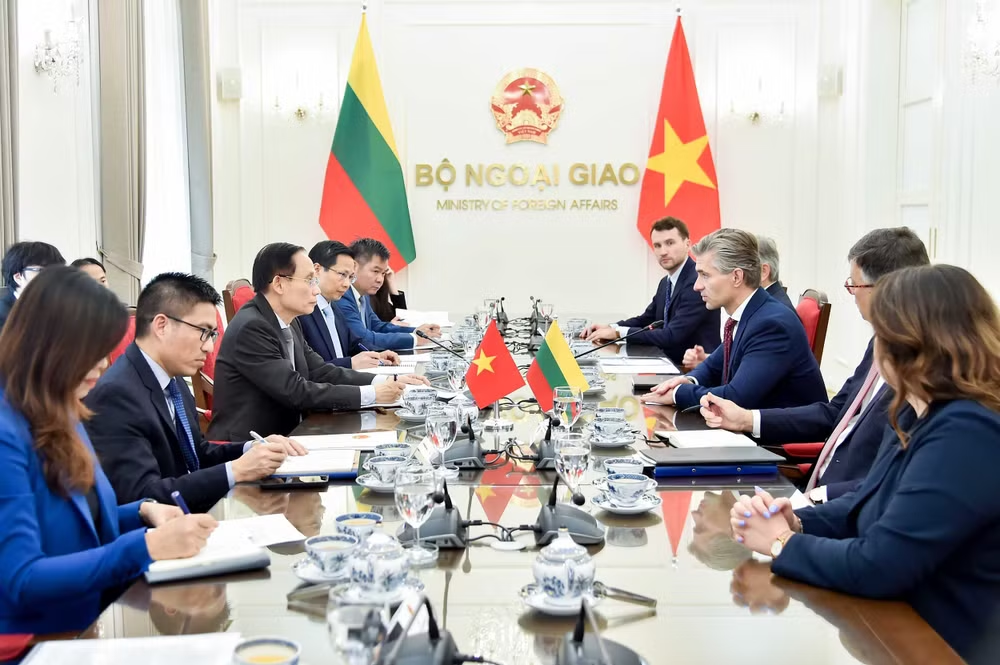
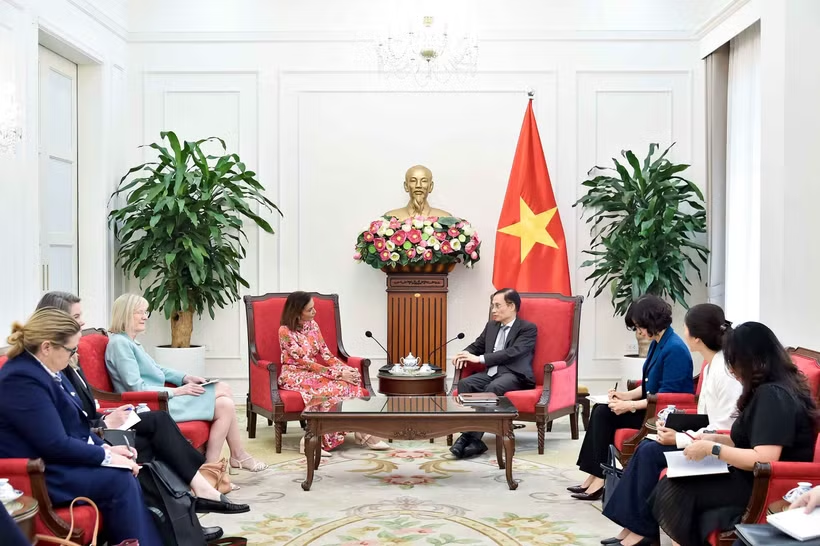
At the talks between Vietnamese Minister of Foreign Affairs Le Hoai Trung and Lithuanian Minister of Foreign Affairs Kestutis Budrys in Hanoi on July 28. (Photo: Courtesy of Vietnamese Ministry of Foreign Affairs)
Trung also called for more effective implementation of existing cooperation agreements, stronger business connectivity and expanded collaboration in areas with significant potential, including financial technology (fintech), digital infrastructure, cybersecurity, logistics, energy, science, technology and innovation.
He suggested the two countries expedite negotiations on a double taxation avoidance agreement and another on visa exemptions for holders of official passports, which are expected to provide an important legal foundation for boosting trade and labour cooperation. The official also called for closer coordination and mutual support at multilateral forums and international organisations.
For his part, Budrys lauded Vietnam's socio-economic achievements and growing role in the region and the world, and affirmed that Lithuania considers Vietnam its most important partner in Southeast Asia and wants to further deepening bilateral relations across all sectors.
He said Lithuania stands ready to serve as Vietnam's gateway to the Baltic region and Europe, and proposed that the two countries strengthen their roles as gateways to foster closer ties between ASEAN and the European Union.
The two foreign ministries should continue serving as the main coordinating bodies for implementing bilateral cooperation, the official said, noting the hope that they would maintain regular consultation and exchange mechanisms.
Budrys agreed that the two foreign ministries should continue serving as key coordinators in implementing bilateral cooperation and expressed support for maintaining regular consultation and exchange mechanisms between the ministries.
The official thanked Vietnam for opening its market to Lithuanian poultry, fish and eggs, and proposed that the two sides push ahead with the signing of agreements to facilitate market access for other signature products from both countries.
The two ministers highlighted promising prospects for cooperation in trade, investment, the digital economy, the green economy, renewable energy, culture, education and training.
Trung proposed that Lithuania share its expertise and support Vietnam in areas where it has strengths, including fintech, laser physics, artificial intelligence and cybersecurity.
The two sides also exchanged views on regional and international issues of mutual concern. They agreed to strengthen coordination at the United Nations and within the ASEAN–EU framework while reaffirming their support for multilateralism and international law in addressing both traditional and non-traditional security challenges.
The ministers stressed the importance of maintaining peace, stability, security, safety and freedom of navigation and overflight, and settling disputes through peaceful means in accordance with international law, particularly the 1982 United Nations Convention on the Law of the Sea (UNCLOS)./.